In This Article
XRP trades under close market scrutiny as 2026 unfolds, with price action shaped by adoption trends, regulation, and institutional flows. That backdrop explains why many holders ask whether idle XRP can produce income while markets consolidate. The answer depends on understanding how XRP differs from Proof-of-Stake assets.
Why Native XRP Staking Does Not Exist
XRP does not rely on staking to secure its network. The XRP Ledger uses the Ripple Protocol Consensus Algorithm, not Proof-of-Stake. Validators confirm transactions through agreement rather than token locking. They receive no monetary rewards.
Key implications include:
No on-chain staking rewards
No inflation-based payouts
No requirement to lock XRP for network security
As a result, “staking XRP” refers to off-chain products rather than blockchain mechanics.
What XRP “Staking” Means in Real Terms
XRP staking technically does not exist as a native blockchain function because the XRP Ledger (XRPL) uses a consensus algorithm (RPCA) rather than Proof-of-Stake (PoS).
In 2026, "XRP staking" refers to two main ways of earning passive rewards:
Platform-Based Lending: Users deposit XRP into third-party centralized exchanges (like Binance or OKX) or lending platforms (like Nexo). These platforms "borrow" your XRP to lend to others, paying you interest in return, often marketed as "staking" for simplicity.
DeFi and Wrapped Tokens: On networks like Flare, users can wrap their XRP (as FXRP or stXRP) to participate in liquid staking or liquidity pools, earning rewards from protocol fees or incentives.
Common structures include:
Interest-bearing savings accounts
Fixed-term lending programs
Liquidity access for traders and institutions
Platforms pay users interest generated from borrowing demand. This approach delivers passive income without changing how the XRP Ledger operates.
How XRP Holders Earn Yield
The earning process follows a consistent flow across platforms.
It typically involves:
Purchasing or holding XRP
Depositing XRP into an earn or savings product
Choosing flexible or fixed-term conditions
Receiving interest daily or at maturity
Flexible products allow withdrawals at any time but offer lower returns. Fixed products lock funds for set periods in exchange for higher yields.
Leading Platforms Offering XRP Yield in 2026
- Binance – High-liquidity exchange offering flexible and fixed XRP earn products
- Kraken – Regulated platform focused on secure, predictable XRP lending
- Nexo – Yield-focused platform with daily interest and credit features
- YouHodler – Weekly XRP rewards with flexible savings and strategy tools
Binance Earn – Flexible and Fixed Savings
Binance remains one of the most widely used platforms for earning yield on XRP because of its range of options and high liquidity. The exchange’s Earn products let users choose between flexible savings with anytime access and fixed-term savings that offer higher interest for locking XRP for set periods.

Kraken – Easy and Regulated Lending
Kraken appeals to investors who value security and regulatory compliance. While Kraken generally offers lower APYs on XRP than some competitors, its focus on robust infrastructure and transparent operations makes it attractive to conservative holders.
Kraken’s lending product for XRP emphasizes simplicity and trust, with interest distributed on a predictable schedule and the ability for users to withdraw without lockups. This approach suits those who prioritize stability over yield size.
Nexo – High Yield with Flexible and Fixed Terms
Nexo stands out for higher potential yield rates and advanced financial features. Users can earn competitive interest on XRP and other assets through interest-bearing accounts that pay daily and compound over time. Nexo’s product suite includes flexible savings with daily payouts and fixed-term savings that can deliver even stronger returns in exchange for locking assets for set periods.

The platform also integrates lending and credit features, such as borrowing against XRP without selling it. Many users may unlock higher APYs by participating in the platform’s loyalty programs or holding native tokens, adding versatility to how yield is earned.
YouHodler – Weekly Rewards and Flexible Options
YouHodler offers XRP holders a weekly reward system through its yield accounts, making it one of the more flexible earners for passive income. Rewards are typically credited every seven days, and the platform allows for tiered interests that can increase with higher loyalty levels or broader usage of its products.
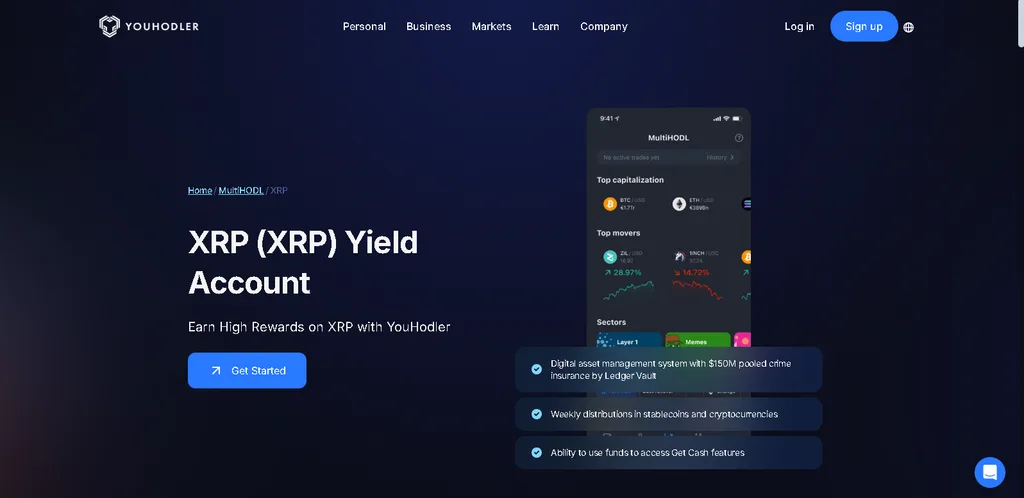
YouHodler’s interface emphasizes user control over deposits and transparent payout structures, and it supports features like MultiHODL that add strategic earning options beyond basic savings. Such mechanisms can appeal to holders looking for consistent reward frequency and a user-friendly earning experience.
Key Advantages and What to Consider
Across these platforms, several common advantages emerge:
Diverse Yield Structures: Flexible and fixed-term products let holders choose between liquidity and higher APYs.
Daily or Weekly Rewards: Frequent payouts help compound earnings or adjust strategies quickly.
Integration with Broader Crypto Services: Platforms like Nexo and Binance provide borrowing, trading, and credit features that enhance utility.
Regulatory and Security Variances: Exchanges like Kraken emphasize compliance, while others balance risk and yield differently.
Risks That Shape XRP Yield Outcomes
Earning yield with XRP introduces trade-offs that holders must understand.
Key risks include:
Platform risk tied to third-party custody
Liquidity limits during fixed-term commitments
Market volatility that can outweigh earned interest
Regulatory shifts affecting centralized services
These factors explain why many users start with smaller allocations.
What XRP Yield Signals Going Forward
XRP income products evolve alongside market demand rather than network rules. Yield depends on borrowing activity, not block rewards. That distinction shapes expectations. XRP does not produce protocol-driven income, but structured products allow holders to put assets to work under defined conditions. Understanding that framework helps investors assess opportunities with clarity rather than assumptions.