

In This Article
Bitcoin currently trades at $66,820, down 2.04% over the past week. The crypto king is also down by over 4% on the monthly time frame. Price action feels calm on the surface, but underneath, the macro and institutional backdrop is shifting.

BTC’s price action over the past 7 days (Source: CoinCodex)
Fed Policy and Inflation Risks Still Cap Upside
The biggest force shaping Bitcoin right now is macroeconomic policy.
The Federal Reserve continues to signal a “higher-for-longer” stance, keeping interest rates elevated and limiting liquidity across global markets. This environment reduced the likelihood of aggressive risk-on rallies, keeping Bitcoin range-bound.
At the same time, inflation pressures are still persistent, fueled in part by elevated energy prices linked to geopolitical instability. Markets are now highly sensitive to upcoming inflation data releases, as any upside surprise could delay rate cuts even more and weigh on crypto markets.
This combination acts like a ceiling on Bitcoin’s momentum.
ETF Flows Flip Positive
One of the most important recent developments is a shift in institutional flows.
After four consecutive months of outflows, Bitcoin ETFs recorded approximately $1.3 billion in inflows during March, which was a major turnaround in institutional sentiment.

Bitcoin ETF flows (Source: Farside Investors)
This suggests that large players are beginning to see the $65K–$70K range as an accumulation zone rather than a distribution phase.
However, the picture is not entirely one-sided. Recent sessions have also seen intermittent outflows, which proves that there is still some hesitation among institutions and a lack of full conviction.
Options Expiry and Liquidations Trigger Short-Term Volatility
Another major driver of recent price action has been derivatives market activity.
Bitcoin recently faced a $14 billion options expiry event, one of the largest of the year, which contributed to increased volatility and price suppression toward key levels.
In addition, over $400 million in leveraged positions were liquidated within a short period, primarily affecting long traders.
This kind of activity does not necessarily change the long-term trend, but it does create short-term distortions. Once these positions are cleared, the market often regains direction based on fundamentals like ETF flows and macro conditions.
Geopolitical Developments
Geopolitics is still a central force in Bitcoin’s current price structure.
Recent developments surrounding tensions in the Middle East, including signs of potential de-escalation, directly impacted Bitcoin’s price. Reports suggesting a possible resolution to the conflict helped push BTC back toward the $68K–$69K range.

Article from Reuters
At the same time, the overall impact of the conflict has driven oil prices significantly higher, feeding into inflation concerns and influencing central bank policy expectations.
This creates a dual effect. In the short term, Bitcoin reacts like a risk asset, selling off during uncertainty. In the longer term, however, geopolitical instability continues to reinforce its role as an alternative store of value.
Bitcoin Finds Stability After Its Worst Q1 in Years
Despite current resilience, it is important to understand the broader context.
Bitcoin just experienced its worst first quarter since 2018, dropping close to 23% and extending a multi-month correction.
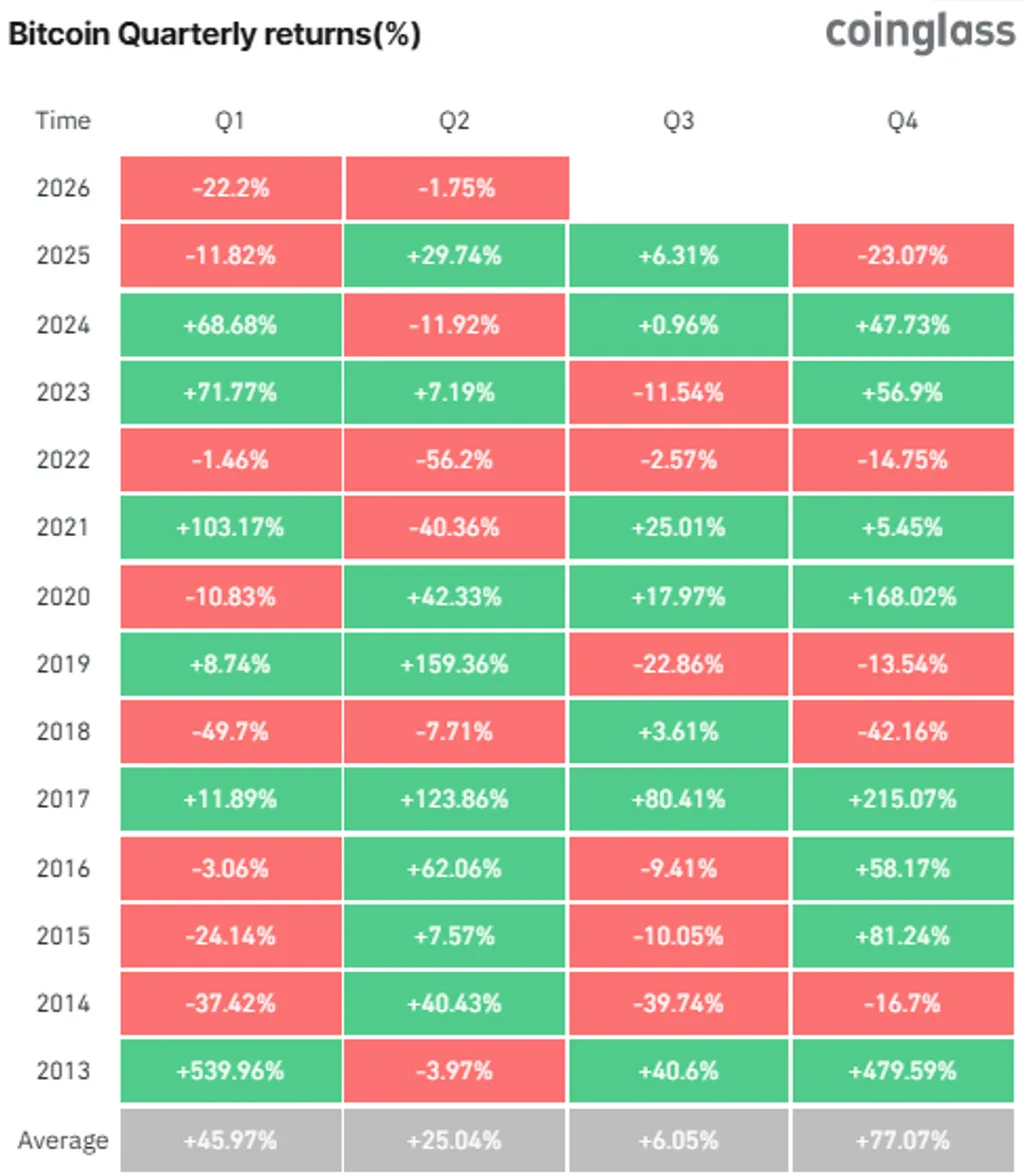
This explains why price action feels subdued. The market is still in a recovery and consolidation phase rather than a full bullish expansion.
Historically, periods after sharp corrections often involve extended sideways movement before a breakout occurs. That appears to be the phase Bitcoin is currently navigating.
Bitcoin ($BTC) Price Prediction Table
| Year | Min Price | Avg Price | Max Price |
| 2026 | $85,000 | $102,000 | $125,000 |
| 2027 | $110,000 | $135,000 | $165,000 |
| 2028 | $140,000 | $175,000 | $215,000 |
| 2029 | $170,000 | $210,000 | $260,000 |
| 2030 | $200,000 | $250,000 | $320,000 |
| 2040 | $650,000 | $850,000 | $1,200,000 |
These projections reflect growing institutional adoption, constrained supply, and recurring macro trust shocks. Volatility never disappears, but for now, the long-term bias is still upward.
Final Thoughts
Bitcoin is currently caught between two powerful forces.
On one side, macro pressures like high interest rates, inflation, and regulatory uncertainty are limiting upside. On the other, renewed ETF inflows and long-term institutional accumulation are building a strong foundation.
This tension explains the current consolidation around $70K.
What makes this phase particularly important is that the underlying structure of the market is changing. Institutional participation, macro sensitivity, and liquidity dynamics are all reshaping how Bitcoin trades.


