US Ambassador to China David Perdue revealed that President Donald Trump asked Chinese President Xi Jinping whether Beijing would be interested in buying American weapons. This was very unusual and immediately raised questions about US-China policy and Washington’s military support for Taiwan.
Speaking on Fox News Sunday, Perdue said Trump asked Xi “at one point” whether China wanted to purchase US arms. Perdue did not say when the exchange occurred or how Xi responded. The White House subsequently said there were no plans to sell weapons to China, while the State Department said US law prohibits such sales.
That legal barrier is major. China is currently classified by the US Commerce Department as an arms-embargoed country. This means that any genuine weapons agreement would require a major change to existing US restrictions.
The comments also come at a sensitive time for Taiwan. A proposed US weapons package worth up to $14 billion is delayed, while Xi used his Sept. 24 meeting with Trump in Washington to press the US again over Taiwan.
The Taiwan Relations Act provides the legal framework for Washington to make defensive equipment available to Taiwan so it can maintain a sufficient self-defense capability.
What could it mean for defense stocks?
For now, there is no confirmed China arms deal, so there is no immediate new revenue stream for US defense contractors.
If Washington ever removed the restrictions and opened China to selected military exports, however, the potential market would put major contractors including Lockheed Martin, RTX, General Dynamics, Northrop Grumman and Boeing in focus.
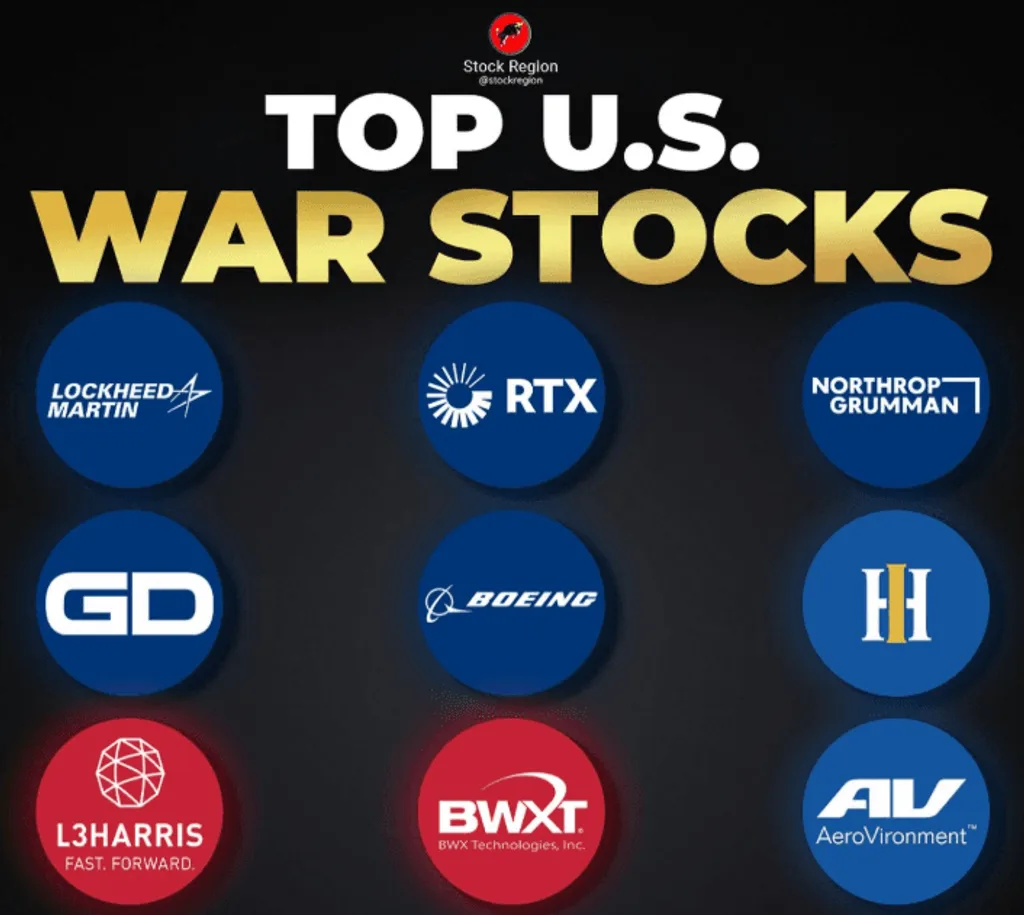
(Source: stockregion)
The bigger near-term financial issue may instead be Taiwan. Previous US packages for Taipei have included HIMARS launchers, Javelin missiles, howitzers and drones. A decision to approve, delay or scale back more purchases could therefore affect future order pipelines for US defense suppliers.
There are risks in the other direction too. RTX revealed that China previously imposed sanctions on parts of its business over arms sales to Taiwan. This just proves how rising tensions can create costs alongside new defense contracts.
Taiwan risk could matter more to global markets
The bigger market impact may ultimately come from what Trump’s remarks signal about US-China relations rather than from an actual weapons transaction.
If investors interpret them as part of a wider US-China détente, Chinese and Hong Kong equities, trade-sensitive companies and the yuan could benefit from a lower geopolitical risk premium. Greater uncertainty around Taiwan, however, could produce the opposite reaction.
Taiwan is still crucial to the global semiconductor supply chain. In fact, its export orders recently hit a record high thanks to booming AI demand. Any significant increase in cross-Strait tensions could therefore put semiconductor and technology stocks under pressure while increasing demand for traditional safe-haven assets.
For investors, the key question is less whether China is about to buy American weapons, and more whether the exchange suggests a change in how Washington balances relations with Beijing against its longstanding security relationship with Taiwan.