In This Article
The term “nonce” might sound obscure at first, but it plays a critical role in how digital ledgers stay secure, unique, and resistant to fraud. From powering the mining process in cryptocurrencies like Bitcoin to preventing transaction replay attacks in account-based systems like Ethereum, nonces are fundamental components of blockchain systems.
This article will break down what a nonce is, how it works, different types of nonces, potential security risks, and best practices to prevent attacks.
What Is a Nonce in Blockchain?
A nonce — short for “number used once” — is a unique, one-time value used in cryptographic systems, including blockchain. In blockchain specifically, a nonce is typically a random or pseudo-random number that helps ensure uniqueness and security of blocks or transactions.
Nonce in Proof-of-Work (PoW) Systems
In PoW blockchains like Bitcoin, miners repeatedly adjust the nonce to create a hash that meets the network’s difficulty target — for example, a hash beginning with a certain number of zeros. This trial-and-error process is what makes mining computationally hard and adds security to the network.
Nonce in Transactions
In other contexts like Ethereum, each transaction has a nonce assigned to it to track order and prevent replay attacks — ensuring that transactions are processed only once and in the correct sequence.
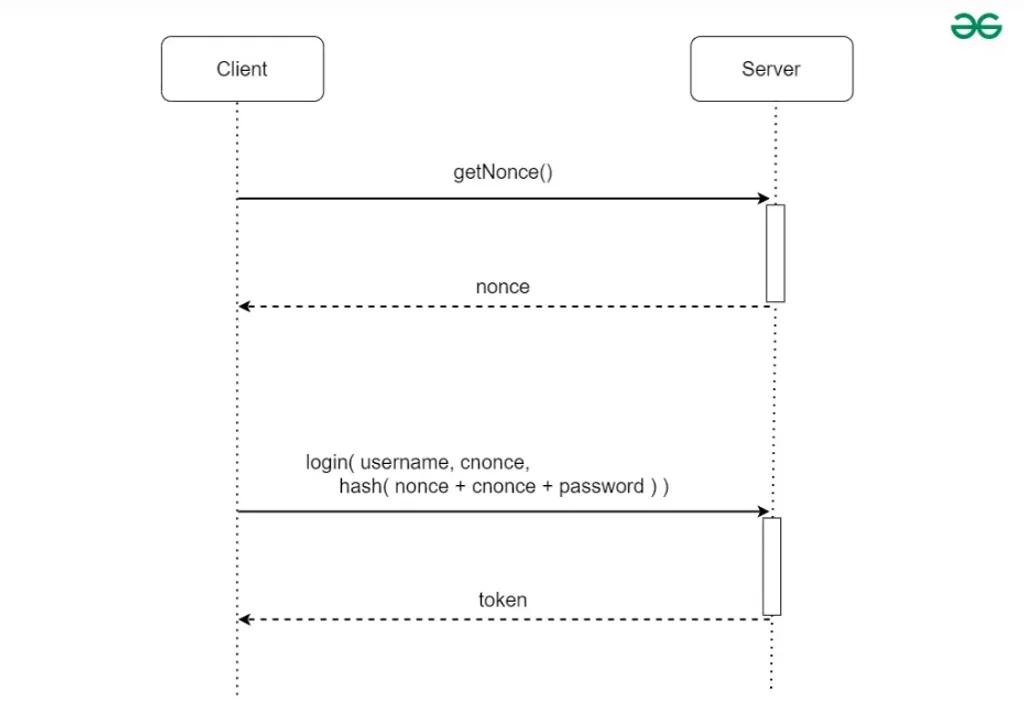
(Source: Geeksforgeeks)
Why Does Nonce Matter in Blockchain?
Nonces are crucial because they help accomplish several key security and integrity goals in blockchain systems:
Ensuring Unique Blocks and Transactions: Each block or transaction must be unique — nonces help guarantee that uniqueness.
Powering Consensus Mechanisms: In PoW, nonces make mining competitive and secure.
Preventing Replay Attacks: A reused transaction can be malicious; nonces protect against these kinds of attacks.
Order Enforcement: In account-based models (e.g., Ethereum), transaction nonces ensure transactions execute in the correct order.
Different Types of Nonces
Nonces vary depending on how they’re used and generated. Below are the most common types:
1. Mining Nonce
Used primarily in Proof-of-Work blockchains, mining nonces are the variable that miners change to find a valid block hash. The goal is to find a hash that meets the network’s difficulty requirements — a process that consumes computational power.
2. Transaction Nonce
Especially used in blockchains like Ethereum, this nonce is incremental, representing the number of previous transactions sent from an account. It ensures the correct ordering of transactions and blocks replay.
3. Cryptographic Nonce
This form of nonce is a general cryptographic concept — a random or pseudo-random value used once in secure communications to prevent replay attacks and ensure message uniqueness.
4. Replay Protection Nonce
Used in certain cross-chain or multi-network scenarios to ensure that a transaction signed on one chain cannot be maliciously reused on another.
Random vs Sequential Nonce
Random nonces are unpredictable and ideal for cryptographic security.
Sequential nonces are predictable but ensure strict ordering (useful in transaction systems).

How Nonce Helps Secure the Blockchain
Nonces enhance blockchain security in multiple ways:
• Prevents Double-Spending
• Makes Block Manipulation Expensive
Because finding a valid nonce requires real computing work, attackers would have to expend massive resources to rewrite blocks — making tampering economically impractical.
• Stops Replay Attacks
Replay attacks — where an attacker resends a valid transaction — are mitigated when each transaction nonce is unique and sequential.
Can Nonce Be Attacked?
While nonces are designed to boost security, some attacks can exploit poor implementation:
1. Replay Attacks
If nonces aren’t managed correctly, attackers might reuse valid messages or transactions to trick systems. Proper nonce management prevents this.
2. Hash Collision and Brute Force
In extreme cases, a poorly implemented nonce could allow predictable values, leading to easier collisions or guesses. Ensuring randomness adds resilience.
3. Double-Spend and 51% Attacks
While not attacks on the nonce itself, network-level attacks like 51% attacks can undermine the security model that relies on PoW and nonces by controlling the consensus.
How to Secure Nonces and Prevent Attacks
Here are best practices that blockchain developers and network architects use to keep nonces safe:
Use Strong Randomness
For cryptographic nonces, use cryptographically secure pseudo-random generators to reduce prediction risks.
Enforce Proper Transaction Ordering
Make sure transaction nonces are strictly incremental and validated by nodes to stop replay attacks.
Blockchain Consensus Hardening
Strong consensus mechanisms and diversified mining/staking help protect the overall network so nonces serve their intended purpose securely.
Monitoring & Validation
Nodes should always verify that nonce values are unique and adhere to network rules before accepting transactions or blocks.
Conclusion
In simple terms, a nonce is a one-off number that makes blockchains unique, secure, and resistant to malicious activity. Whether used in mining in Proof-of-Work systems or in transactions to prevent replays and enforce order, nonces are a hidden workhorse of blockchain security and integrity.
Frequently Asked Questions (FAQ)
What exactly does “nonce” stand for in blockchain?
“Nonce” is short for “number used once”, a unique value used to ensure security and uniqueness in operations.
How is a nonce used in mining?
In Proof-of-Work, miners adjust the nonce to find a hash that meets the difficulty target — this is what drives the block creation process.
Why do transactions need nonces?
Transaction nonces ensure correct ordering and prevent replay attacks — a transaction can’t be reused maliciously.
Can a nonce be predicted by attackers?
If implemented with weak randomness or poor sequencing, nonces can be more predictable — but proper nonce generation dramatically reduces this risk.
Are nonces used in all blockchains?
Most use nonces — but how they’re used varies by consensus type (e.g., mining nonces in PoW vs transaction nonces in account-based systems).