In This Article
When people ask “What is Bitcoin mining?”, they’re really talking about the core process that makes Bitcoin (BTC) work — verifying transactions, securing the network, and issuing new coins. Mining is what turns a decentralized digital currency into a functioning payment system without a central authority. In 2025, as mining becomes more professional and resource-intensive, many wonder: Can you still mine Bitcoin — and does it still make sense? This article explains how Bitcoin mining works, how it has changed over time, and under what conditions mining remains viable.
What Exactly Is Bitcoin Mining — How It Works
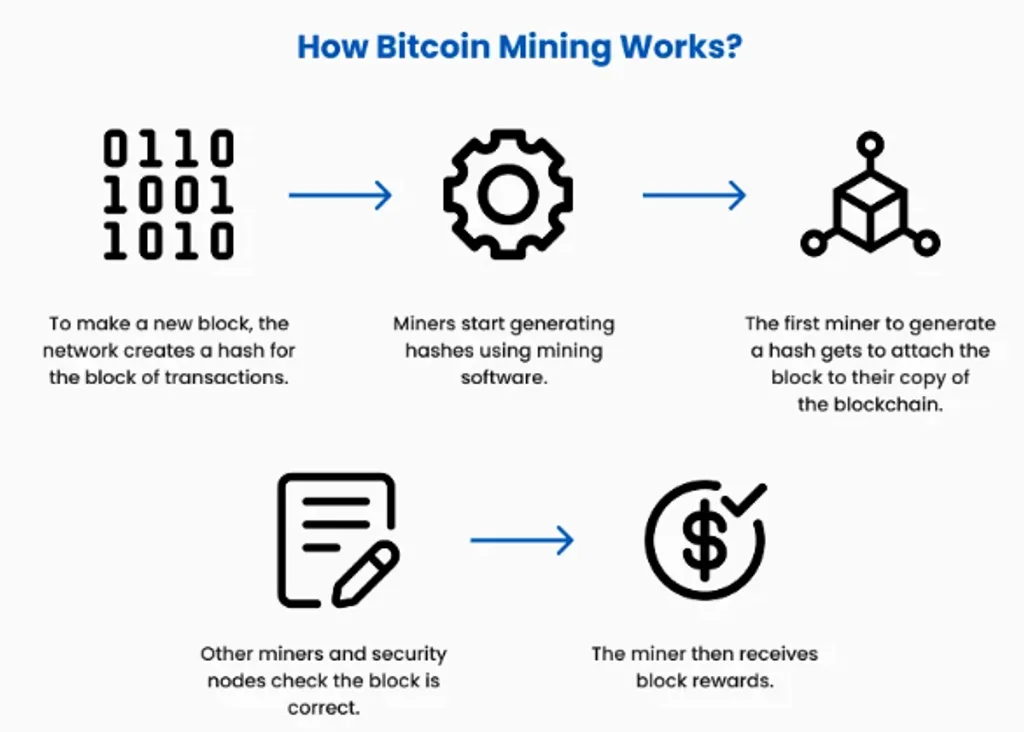
Bitcoin mining is much more than “making new bitcoins.” It’s the mechanism that keeps the network honest and functional. When someone sends bitcoin to another person, that transaction is broadcast to the network. Miners — participants running powerful hardware — collect these unconfirmed transactions, bundle them into a candidate “block,” and then compete to solve a cryptographic puzzle.
(Source: TMGM)
Thus, mining serves two essential purposes: verifying and securing Bitcoin transactions, and controlling the issuance of new coins. In that sense, Bitcoin miners play a role analogous to validators or “miners” in traditional systems — only here there’s no central bank or intermediary.
How Bitcoin Mining Has Evolved
In the early days of Bitcoin, mining was something that could reasonably be done by individuals on home computers — even regular desktops or GPUs. As long as you had a modest computer, you could try mining and occasionally find blocks for a reward.
ASIC miner
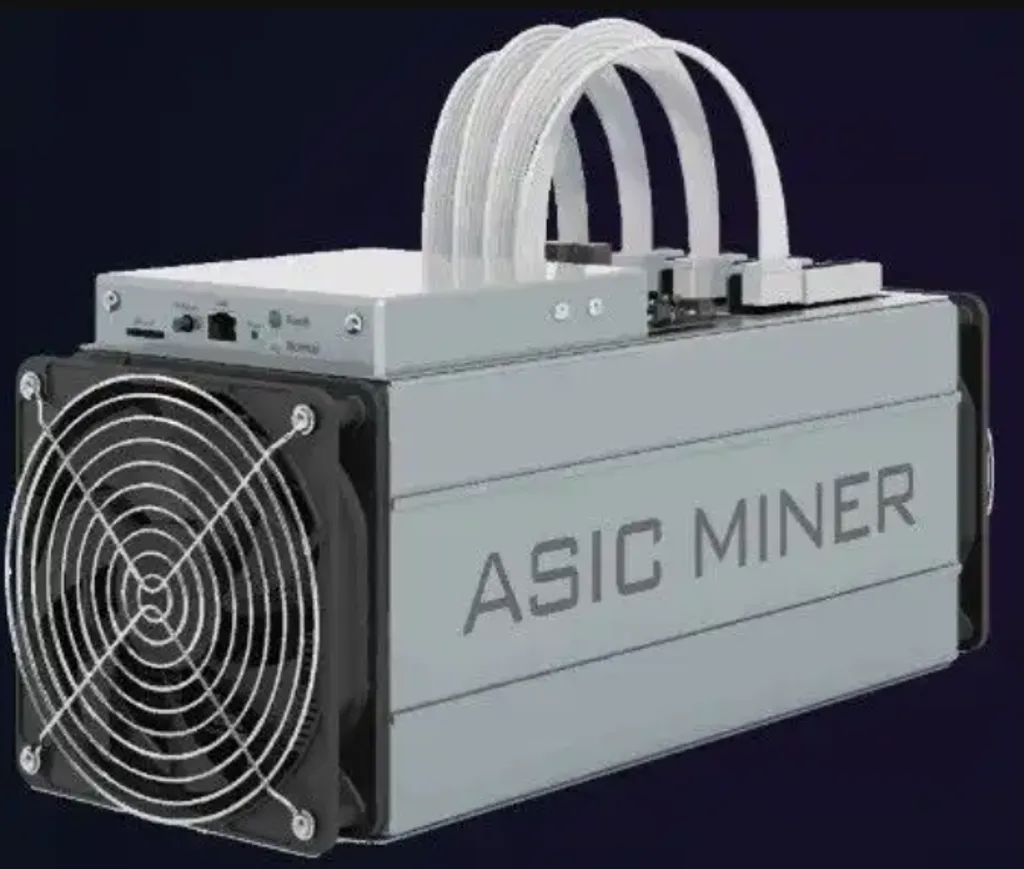
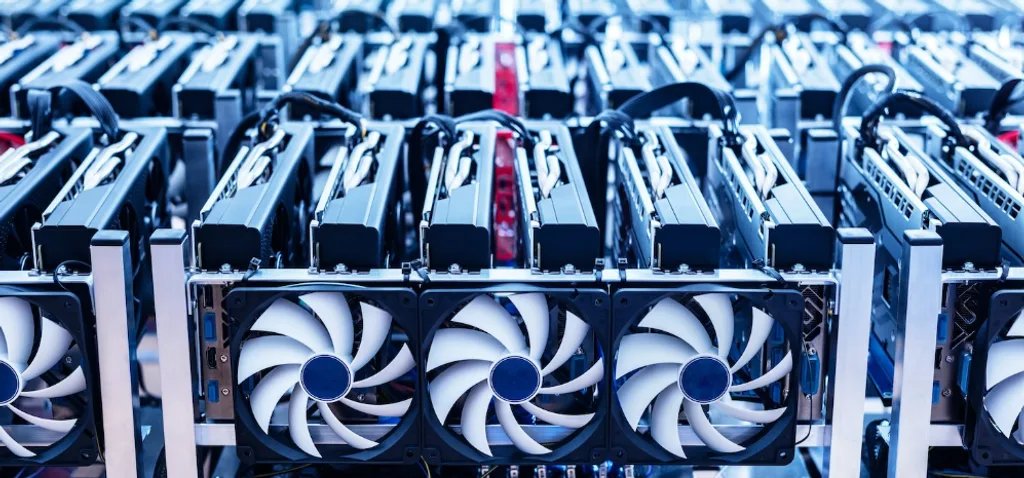
Mining operations thus shifted from individual hobbyists’ machines to industrial-scale farms: large installations with many ASIC miners, efficient cooling, reliable electricity, and power-economies of scale. In short: what used to be a decentralized, grassroots process has gradually become cliqued to those with capital, infrastructure, and professional setups.
Can You Still Mine Bitcoin in 2025?
Yes — technically, you can still mine Bitcoin. The network still operates under proof-of-work, new blocks are still being minted, and miners still receive rewards.
That said, whether it makes sense for you personally depends heavily on several factors. In 2025, for a small-scale or home-based miner, mining faces serious challenges:
The global hash rate is extremely high, which means competition is fierce; your chance of successfully mining a block solo is very low.
Mining requires specialized ASIC hardware, which can be expensive, and you also need reliable electricity. For many individuals — especially where electricity is costly — the cost of running hardware and paying power bills outweighs the potential reward.
Because of these realities, many small miners find it unrealistic to solo-mine — instead they join mining pools, combining their computational power with others to increase odds of rewards (though rewards are shared).
So while mining is still possible, it’s rarely profitable for “typical” individuals with modest setups. For many, especially in regions with higher electricity costs or without specialized hardware, the economics just don’t add up.
That said, for those who can manage the right conditions — low energy costs, access to powerful ASICs, perhaps industrial-scale operations — mining can still yield returns. In other words, it's no longer a casual hobby: it's a competitive business that requires serious investment.
What It Takes to Mine Bitcoin Profitably in 2025
For mining to make sense today, you really need to meet certain conditions. You need access to modern, efficient mining hardware (ASICs), stable and cheap electricity, proper cooling/infrastructure, and — ideally — some scale (either by running many machines or participating in a mining pool). Combining these factors helps lower costs per unit of hash power and increases your odds of earning rewards.
Markets and experts suggest that miners who succeed in 2025 tend to be those who operate as businesses, rather than hobbyists — and who treat mining as a serious, ongoing investment rather than a side activity.
Without these advantages, mining may turn into a money-losing exercise rather than a profitable venture.
Why Mining Still Matters — Even If It’s Harder
Even if mining is harder and less accessible for individuals now, it is still absolutely critical to Bitcoin’s functioning and values. Through proof-of-work and mining, Bitcoin preserves properties like decentralization, trustlessness (no central authority), security against fraud or double-spending, and predictable issuance. Mining ensures that the ledger remains accurate and tamper-resistant.
Furthermore, the fact that you can’t just create Bitcoins at will — that mining requires real computational effort — is what gives Bitcoin its scarcity and resistance to manipulation. That’s essential to its value proposition as a decentralized digital currency.
Conclusion
Bitcoin mining is the foundational process that allows the Bitcoin network to operate — verifying transactions, securing the ledger, and releasing new coins under controlled rules. Over the years, mining evolved from something almost anyone could try with a home computer to a highly competitive, capital-intensive industry relying on specialized hardware, cheap electricity, and infrastructure.
In 2025, you can still mine Bitcoin, but for most people, doing so profitably is challenging. Unless you have access to efficient hardware, low electricity costs, and perhaps scale or pool participation, it’s unlikely to be a practical or profitable endeavour. For many, simply buying Bitcoin directly remains the more realistic option.
That said, mining are vitally important to Bitcoin’s integrity and decentralization — so even if fewer individuals succeed, the network continues to function because of those who do.