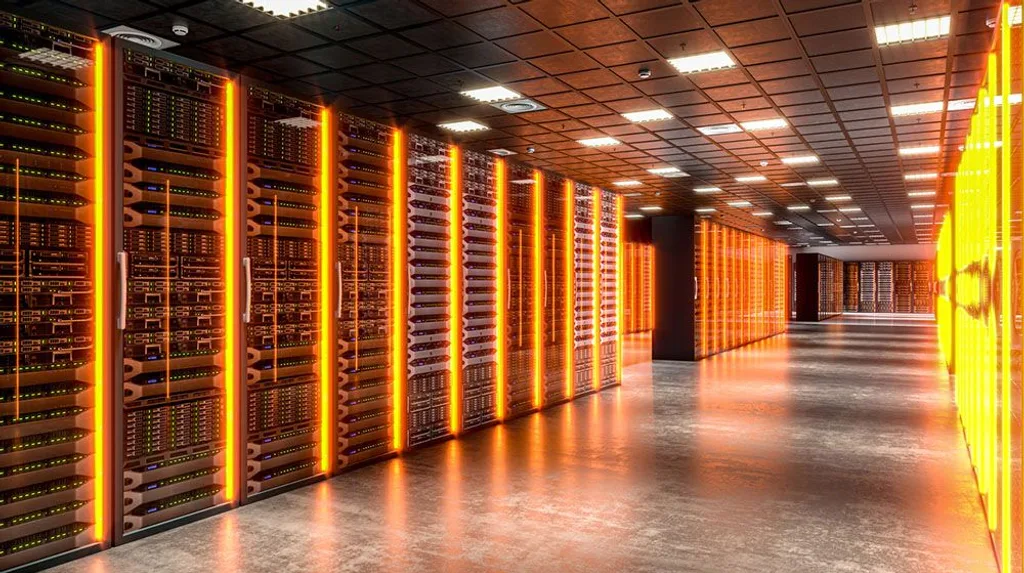
The AI boom is usually described as a technology race, but underneath it sits an enormous financing challenge.
Building a modern AI data center requires far more than buying Nvidia GPUs. Developers need land, grid connections, power plants, cooling systems, fiber, transformers, servers and long-term access to electricity. Those costs can reach tens of billions of dollars for a single large campus.
Industry estimates suggest the global AI infrastructure buildout could require trillions of dollars of investment through 2030. Financing that expansion is increasingly pulling in banks, bond investors, private-credit funds, infrastructure managers and even Nvidia itself. Reuters has described a financing requirement of roughly $3.6 trillion between 2026 and 2030 around the broader AI infrastructure buildout.
The result is a new financial ecosystem where the companies building AI models are often not the same companies owning the buildings, lending the money or carrying the long-term asset risk.
Hyperscalers Can Pay Cash — Most AI Companies Cannot
Microsoft, Alphabet, Meta and Amazon have enormous balance sheets and can finance a large share of their data-center spending from operating cash flow.
Smaller AI companies and cloud providers have a harder problem.
They may need billions of dollars of GPUs and infrastructure years before the facilities generate enough revenue to repay the investment. That creates demand for outside capital.
One option is ordinary corporate debt. AI cloud companies have increasingly issued bonds and convertible notes to fund GPUs and data-center expansion.
Nebius, for example, announced a $4.5 billion convertible debt offering in August 2026, with proceeds aimed partly at its expanding AI infrastructure business. The deal is a useful example of how equity investors can indirectly finance data centers through securities that begin as debt but may later convert into stock. Convertible debt has become one of several financing tools supporting the infrastructure rush.
Large banks can also provide loans directly, while private-credit funds increasingly finance projects that sit somewhere between conventional corporate lending and real-estate infrastructure.
| Financing source | What it typically funds |
|---|---|
| Corporate cash | Hyperscaler capex and owned facilities |
| Bonds / convertibles | GPUs, servers and corporate expansion |
| Bank loans | Construction and equipment |
| Private credit | Higher-risk or specialized projects |
| Project finance | Individual data-center campuses |
| Infrastructure funds | Long-duration physical assets |
| Vendor guarantees | Credit support for customers and developers |
Data Centers Are Becoming Project-Finance Assets
A very large AI campus can increasingly resemble a power plant, airport or toll road from a financing perspective.
A developer may create a special-purpose vehicle that owns the land and physical infrastructure. Banks and private investors lend against long-term contracts signed by a large tenant such as OpenAI, Microsoft or another cloud provider.
Those tenant contracts matter because lenders want predictable cash flows.
A 15- or 20-year lease from a highly valued AI company can be used to support billions of dollars in debt. The underlying facility, power rights and equipment become part of the collateral package.
A recent example is SoftBank-backed SB Energy’s Ohio development for OpenAI. Nvidia agreed to provide up to $105 billion of credit support tied to leases and infrastructure at the site, while also investing directly in SB Energy. The campus is designed to scale to as much as 8 gigawatts of power.
That structure helps explain why AI infrastructure is attracting traditional infrastructure investors.
Coinpaper’s guide to AI infrastructure stocks shows how the boom already extends beyond chips into networking, storage, power and cooling. The financing side is doing the same thing: capital is spreading across the entire physical supply chain.
Nvidia Is Becoming Part Supplier, Part Financier
Perhaps the most unusual development is Nvidia’s increasingly direct role in financing its own ecosystem.
The company does not merely sell GPUs. It has invested in AI labs, infrastructure companies and cloud providers while offering guarantees and other forms of credit support designed to help customers secure financing.
Nvidia has helped mobilize hundreds of billions of dollars in outside capital and recently worked with major financial institutions on plans to turn AI infrastructure into a broader investable asset class. Some proposed structures involve private debt backed by GPU assets and future customer revenue.
That can accelerate demand for Nvidia hardware because customers gain easier access to financing.
But it also creates a new risk.
If a chip supplier invests in customers, guarantees their leases and helps finance the facilities that buy its chips, investors need to distinguish between genuinely independent demand and demand supported by vendor financing.
Nvidia has pushed back against descriptions of the model as circular financing, but the concern has become significant enough that the company recently paused some revenue-sharing arrangements with smaller AI cloud providers.
Coinpaper’s coverage of Nvidia’s Ohio data-center financing shows how vendor support can sit alongside equity, debt and long-term leases in the same project.
The Biggest Constraint May Be Capital, Not Chips
AI data centers are also becoming more expensive.
GPU systems remain costly, while memory, networking, transformers and cooling equipment have all faced supply constraints. Some Nvidia-based AI server systems have seen prices rise by more than 15% as memory costs increased. Server costs therefore raise not only technology costs but also financing requirements.
Higher interest rates add another layer.
A data center financed at a 5% borrowing cost looks very different from one financed at 8%. That means movements in Treasury yields and private-credit spreads can directly affect how many AI projects remain economically attractive. Coinpaper’s guide to Treasury yields explains why capital-intensive industries are especially sensitive to rising borrowing costs.
The financing question therefore matters as much as the technology question.
If AI demand continues growing, Wall Street may end up treating data centers as a new infrastructure asset class similar to telecom towers, utilities and renewable-energy projects.
But if AI revenues disappoint, the losses may not sit only with technology companies. They could spread through banks, bondholders, private-credit funds, infrastructure investors and vendors that guaranteed the projects.
That is what makes the AI data-center boom unusual: the technology may be new, but the trillions behind it are increasingly being financed through some of the oldest machinery in global finance — debt, collateral, leases and long-term cash-flow promises.