Key takeaways
- Nike stock reverses sharp early Investor Day rally
- Company expects another year of declining revenue
- Management targets $5 billion additional revenue by 2031
Nike stock (NYSE: NKE) reversed a sharp early rally on November 17 as investors reacted negatively to the sportswear company's long-awaited turnaround strategy and a recovery timeline extending into fiscal 2029.
Shares initially climbed following Nike's Investor Day presentation but subsequently fell into negative territory, reflecting concerns that the company's financial recovery could take longer than anticipated.
Why Is Nike Stock Falling After Investor Day?
Nike unveiled its Full Stride Ahead strategy during its first major Investor Day since 2017, outlining plans to rebuild growth across performance footwear, sportswear and international markets.
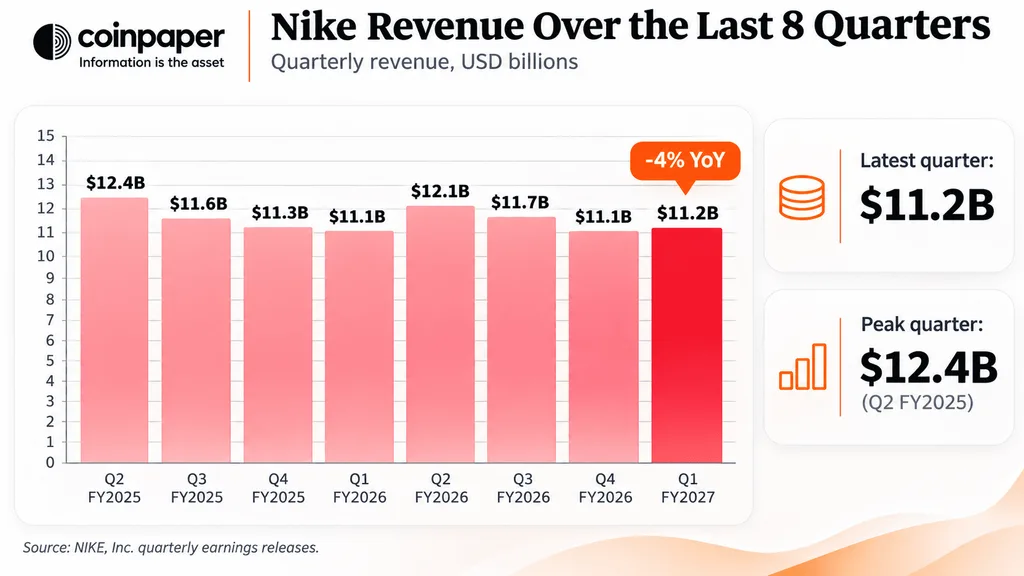
According to the company's official Investor Day announcement, fiscal 2027 revenue is still expected to decline by a high-single-digit percentage.
Nike also reaffirmed its adjusted earnings forecast of $1.15 to $1.35 per share, with an adjusted operating margin of approximately 6%.
Management expects fiscal 2028 to remain a transition year, with revenue declines moderating before a return to market-level growth in fiscal 2029.
That timeline helps explain the market's negative reaction. Investors initially welcomed the longer-term targets but appeared less convinced by a strategy requiring several more years of investment.
The selloff also came during broader stock market weakness, adding pressure to consumer-sensitive companies.
Nike Targets $5 Billion Revenue Growth by 2031
Under the new strategy, Nike expects to generate approximately $5 billion in additional annual revenue by fiscal 2031, using fiscal 2027 as the starting point.
Performance Sports, including running, basketball, football, training and outdoor activities, are expected to contribute roughly $4 billion. Sportswear, including Nike, Jordan and Converse products, would provide the remaining $1 billion.
The company is concentrating resources on 23 priority countries, which management expects to generate more than 90% of its revenue growth.
Nike also introduced ambitious profitability targets. Adjusted earnings per share are expected to reach $3.00–$3.50 by fiscal 2031, while operating margins could improve to 12–14%.
However, those targets depend on stronger full-price sales, improved inventory management and renewed consumer demand.
The recovery will also require Nike to address persistent challenges in China, where weakness has complicated its international growth strategy.
Nike Plans $2.5 Billion in Annual Cost Savings
Nike's turnaround includes the Pace restructuring program, which is expected to deliver approximately $2.5 billion in annualized savings by fiscal 2031.
Those savings will come at a cost. Management expects approximately $1.3 billion in pre-tax implementation charges, including severance expenses and operational restructuring.
The company also plans to return approximately $12 billion to shareholders through dividends between fiscal 2027 and fiscal 2031.
The strategy arrives as investors monitor weakening consumer spending and pressures facing major US retailers.