Key takeaways
- Oil prices reflect expectations, not just current supply
- OPEC production freezes cannot eliminate geopolitical price volatility
- Iran negotiations demonstrate how quickly risk premiums disappear
On November 2, oil prices plunged more than 4%, sending Brent crude below $109 per barrel and U.S. West Texas Intermediate below $100. Yet the world's most influential oil producers had just agreed not to increase production targets.
A day earlier, seven OPEC+ members announced they would maintain existing production targets for December. The decision should, in theory, have supported prices by limiting additional supply.
Instead, oil sold off sharply as diplomatic discussions involving Iran raised hopes that Middle East shipping disruptions could ease.
Why Oil Prices Can Fall Without Additional Supply
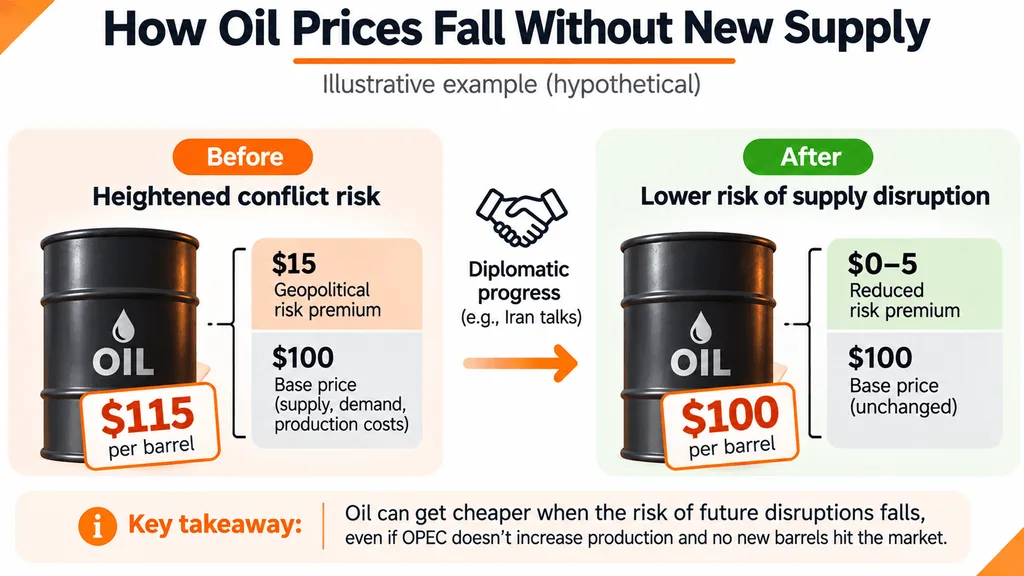
Imagine that oil trades at $115 per barrel because investors fear an attack could disrupt shipments through the Strait of Hormuz.
That price reflects the cost of current production, transportation, expected demand and a premium for the possibility of future shortages.
If negotiations suddenly make an escalation appear less likely, traders may reduce that risk premium even though not a single additional barrel has reached the market.
This is what happened on November 2.
A similar pattern appeared in July, when oil prices dropped 6% following a temporary pause in military operations.
However, lower futures prices do not necessarily mean physical supply has recovered.
We previously documented how Brent prices fell despite tight supplies, illustrating the difference between improving expectations and actual changes in shipping.
Why OPEC Cannot Completely Control Oil Prices
OPEC+ influences prices primarily by coordinating production targets among major oil-exporting countries.
Reducing output can tighten supply, while increasing it can help satisfy demand. However, these decisions do not determine how much oil actually reaches buyers.
During the Iran conflict, several producers have struggled to meet their quotas because infrastructure damage and shipping disruptions have restricted exports.
An earlier OPEC production analysis highlighted this difference between authorized production and physically available supply.
Oil markets also respond to demand expectations. If traders anticipate weaker industrial activity or slower economic growth, they may expect reduced future oil consumption.
That can push prices lower even when OPEC refuses to release additional barrels.
Meanwhile, depleted inventories make the market more sensitive to unexpected disruptions. Saudi Aramco previously warned that global oil reserves were unusually thin, limiting the buffer available during emergencies.
How Futures Traders Move Oil Before Anything Changes
Most widely quoted oil prices come from futures markets, where participants trade contracts for delivery at a future date.
Airlines, refiners and producers use these contracts to manage price risk, while investment funds and other traders take positions based on expected market movements.
When geopolitical expectations change, futures traders can rapidly adjust their positions.
That helps explain why crude prices sometimes reverse within hours of a diplomatic announcement, even when physical supply remains largely unchanged.
JPMorgan recently estimated oil's fundamental value near $94 per barrel, while Brent traded above $115. The difference illustrates how geopolitical and transportation risks can influence market valuations, although the estimate is model-dependent.
There is another complication: falling benchmark prices do not guarantee lower delivered fuel costs.
Damaged shipping routes, expensive insurance and refinery shortages can keep physical energy prices elevated. Coinpaper previously explored how diesel remained expensive even as crude oil weakened.