The XRP Ledger is approaching one of its most consequential protocol upgrade windows this year, with new features designed to make complex transactions safer and institutional account management more flexible.
PermissionDelegationV1_1 is scheduled to activate first, followed by BatchV1_1, assuming validator support remains above the required threshold. Under XRPL’s amendment system, changes must maintain more than 80% validator support for two weeks before becoming active.
Official XRP Ledger documentation describes the upgrades as adding delegated account permissions and the ability to process multiple transactions together.
Atomic Transactions Could Change Complex XRPL Workflows
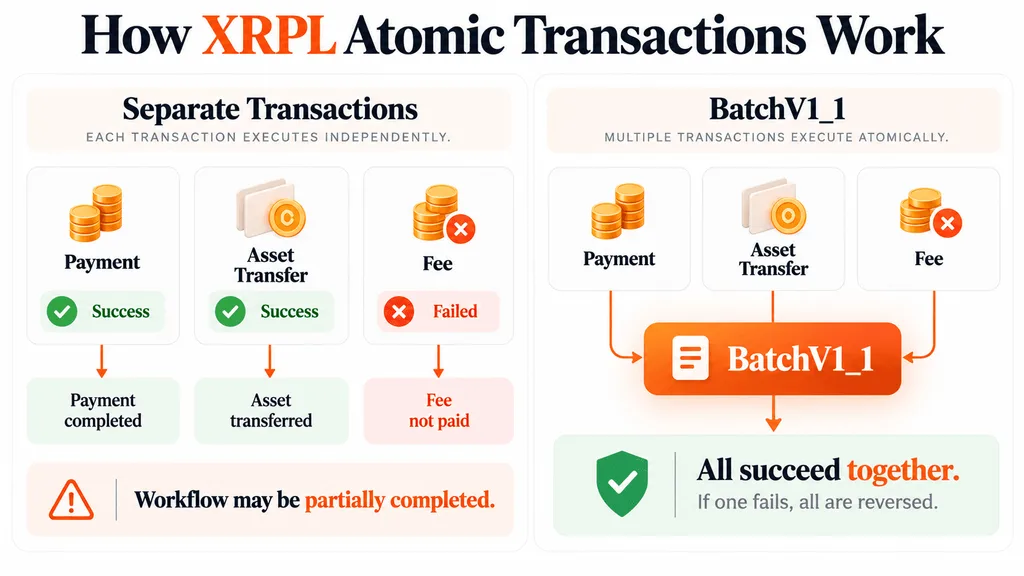
BatchV1_1 allows an account to bundle as many as eight transactions into a single Batch.
The important feature is atomic execution. Developers can configure transactions so every step succeeds together or the entire operation fails.
For example, an application could execute an asset transfer, payment and fee within the same workflow without risking one step completing while another fails.
XRPL documentation supports four execution modes: All or Nothing, Only One, Until Failure and Independent, giving developers more control over how grouped transactions behave.
The feature was initially expected earlier, but its activation timeline moved after validator support changed. The revised BatchV1_1 also replaces an earlier Batch implementation that contained a critical bug.
The upgrade has already attracted attention because asset managers have been preparing applications around atomic settlement.
Delegated Permissions Bring Bank-Style Account Controls
PermissionDelegationV1_1 addresses a different institutional problem.
It allows one XRPL account to grant another account specific permissions without sharing the original account’s master key. A delegated account can receive narrowly defined authority while the main treasury retains ultimate control.
That could allow a financial institution to separate payments, compliance and operational duties across different wallets.
The feature creates a dedicated Delegate ledger object and uses DelegateSet transactions to grant, modify or revoke permissions.
That model expands the bank-style account controls already being developed around XRPL.