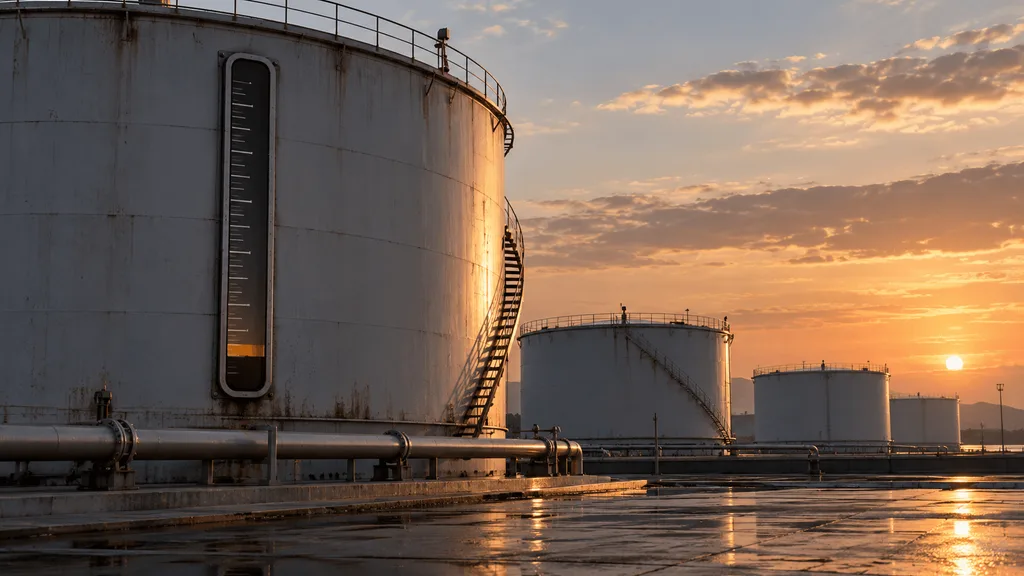
Oil inventories are the buffer between the barrels the world produces today and the fuel consumers need tomorrow.
When production exceeds demand, crude oil and refined products can be stored at refineries, terminals, pipelines, tank farms and even on ships. When supply falls short, those inventories are drawn down to keep refineries running and consumers supplied.
Running low on inventories therefore does not mean the world has literally run out of oil. It means the market has lost part of the cushion that normally absorbs refinery outages, shipping disruptions or sudden production losses.
That is when relatively small supply problems can produce much larger price moves.
Why Commercial Oil Inventories Matter
Most inventories are commercial stocks held by refiners, producers and traders.
These barrels constantly move in and out of storage as companies balance production, refinery demand and consumption. When supply becomes tight, the market draws from these stocks first.
The danger comes when inventories stay unusually low. Buyers then compete for a smaller pool of oil that is immediately available, making prompt barrels more valuable.
That can push the futures curve into backwardation, where oil for near-term delivery costs more than oil delivered later. In practical terms, the market is signaling that a barrel available today is worth more than one arriving months from now.
The International Energy Agency reported that observed global oil inventories fell by another 69 million barrels in July 2026, leaving stocks roughly 410 million barrels below their level at the start of the Middle East war.
Commercial Stocks vs. Strategic Reserves
| Type of inventory | Who holds it | Main purpose | What happens when it falls |
|---|---|---|---|
| Commercial stocks | Refiners, producers, traders | Balance normal supply and demand | Spot markets tighten and near-term prices can rise faster |
| Strategic reserves | Governments or state agencies | Emergency supply during major disruptions | Governments lose part of their crisis-response buffer |
| Refined-product stocks | Refiners, distributors | Keep gasoline, diesel and jet fuel available | Fuel prices can rise even if crude supply looks adequate |
Governments maintain strategic petroleum reserves as a second layer of protection.
IEA members are generally required to maintain emergency stocks equivalent to at least 90 days of net oil imports, although countries structure those holdings differently.
The U.S. Strategic Petroleum Reserve is the best-known example. Unlike normal commercial inventories, the SPR exists specifically to provide oil during major disruptions.
Emergency releases can slow a price spike or replace missing barrels temporarily, but they do not create new production. Every barrel released also eventually needs to be replenished.
Why Low Inventories Make Oil Prices More Volatile
Low stocks do not guarantee higher prices. Demand can weaken, disrupted production can return, or OPEC+ members can increase output.
But thin inventories leave the system with less margin for error.
If a tanker route closes or a major producer suddenly loses output, refiners may have to compete immediately for replacement barrels. That can lift crude prices, refining margins, shipping costs and ultimately gasoline or diesel prices.
Falling oil reserves therefore matter even before the market actually experiences a shortage.
Why Rebuilding Inventories Can Take Years
Drawing inventories down can happen quickly. Rebuilding them is much harder.
If global production simply returns to the same level as consumption, there are no surplus barrels available to refill storage. Producers need to supply more oil than the world currently uses for an extended period.
For example, rebuilding 1 billion barrels at a surplus of 2 million barrels per day would still take roughly 500 days.
That helps explain why prices can remain elevated even after disrupted pipelines, ports or production facilities return.
The consequences also extend beyond crude itself. Sustained high oil prices feed into transport costs, inflation and interest-rate expectations, while producers, refiners and service companies can react very differently. Our guide to energy stocks explains why higher crude does not automatically benefit every energy company equally.