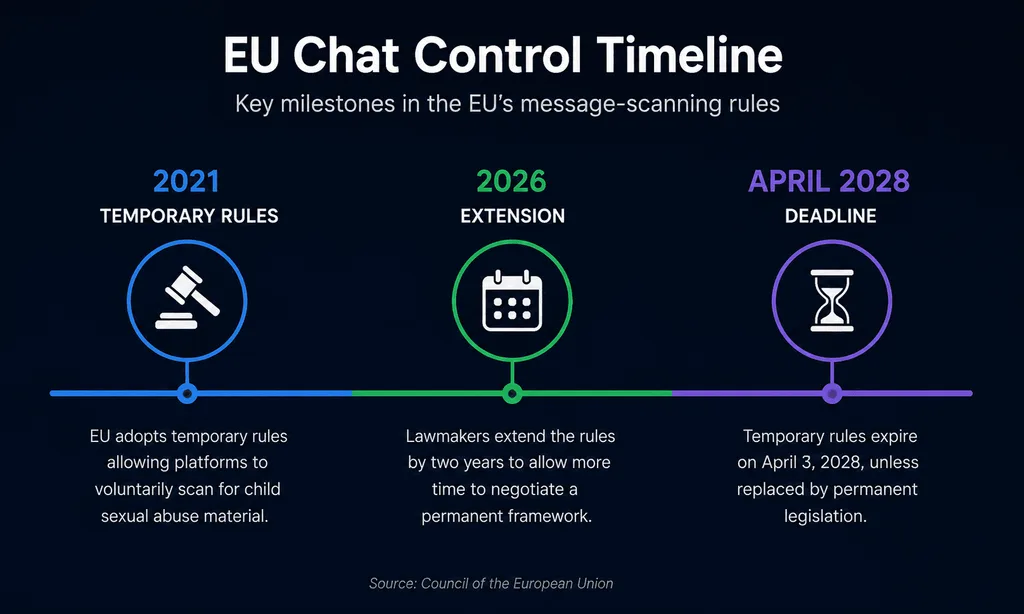
Europe’s private-message scanning debate is back in focus after the EU extended temporary rules allowing online platforms to voluntarily detect child sexual abuse material.
The measure now runs until April 3, 2028 and creates an exemption from parts of the ePrivacy Directive so providers can voluntarily detect, report and remove illegal material.
Importantly, the current rules exclude communications protected by end-to-end encryption. The larger debate concerns the permanent framework that could replace them.
Encryption Becomes the Main Issue
Vyara Savova, senior policy lead at the European Ethereum Institute, argues that content scanning creates broader privacy concerns because detecting targeted material requires technical access to communications.
That becomes more complicated with end-to-end encryption, where services such as Signal and WhatsApp cannot normally read message contents themselves.
Ethereum co-founder Vitalik Buterin has also warned that weakening encryption could create wider cybersecurity risks. His criticism of EU Chat Control focused on the danger of introducing vulnerabilities into systems used by millions of people.
Crypto Users Face Added Security Risks
The issue has particular relevance for crypto users because messaging apps often carry wallet addresses, transaction details, exchange conversations and account-recovery information.
Any weakening of encryption could therefore increase exposure to phishing, identity theft and crypto-related cybercrime.
European privacy regulators have also urged lawmakers to avoid indiscriminate scanning and keep any measures proportionate.
The immediate rules do not force encrypted platforms to scan private conversations. The key question is whether the permanent framework can expand enforcement