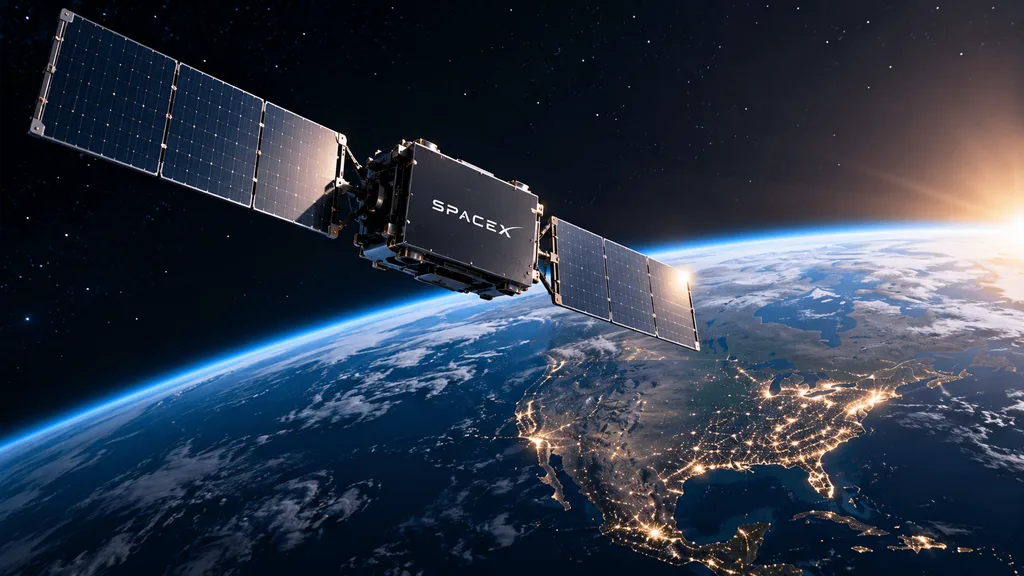
Key takeaways
- SpaceX selects Qualcomm for nationwide terrestrial 5G infrastructure
- Starlink Mobile targets tens of thousands of cell sites
- Verizon, AT&T and T-Mobile face potential new competition
Elon Musk's SpaceX has selected Qualcomm to power a nationwide 5G network under its Starlink Mobile business, accelerating plans to challenge Verizon, AT&T and T-Mobile in the US wireless market.
According to Qualcomm's November 4 announcement, the multiyear agreement covers cellular infrastructure for tens of thousands of US sites, with deployment scheduled to begin in 2027. Financial terms were not disclosed.
The agreement advances SpaceX's ambitions beyond satellite connectivity and follows its earlier $8 billion wireless spectrum deal, which triggered substantial declines in major telecom stocks.
Qualcomm to Supply 5G Technology for Thousands of Starlink Sites
Qualcomm will provide Dragonwing QRU100 radio-unit platforms, QDU100 distributed-unit processors and commercial-grade Layer 1 software.
The technology supports Massive MIMO systems with 64 transmit and 64 receive paths, designed to increase network capacity while improving energy efficiency.
Unlike Starlink's existing satellite broadband network, these systems will operate through conventional ground-based cellular infrastructure.
SpaceX intends to combine both technologies, using terrestrial 5G for high-capacity connectivity and satellites to extend coverage into underserved areas.
Starlink executive Michael Nicolls said the objective is to reduce dropped calls and build an integrated nationwide network.
The deal builds on reports that SpaceX sought access to 80,000 US cell sites, potentially through agreements with existing tower operators.
However, Qualcomm's announcement does not establish that those site agreements have been finalized.
SpaceX Challenges Verizon, AT&T and T-Mobile
The expansion could eventually establish Starlink Mobile as another nationwide wireless operator.
Traditional carriers rely on extensive tower infrastructure, licensed spectrum and established customer relationships, advantages that SpaceX cannot immediately replicate.
Nevertheless, the company's satellite network and recent spectrum acquisitions create a potentially differentiated service.
An earlier SpaceX-related telecom selloff demonstrated how seriously investors are treating the threat.
The competition could also affect existing partnerships.
T-Mobile currently works with Starlink on satellite connectivity, while AT&T has partnered with Amazon Leo to expand satellite services for business and government customers.
Verizon has emphasized the difficulty of building a comparable ground network, arguing that nationwide deployment requires enormous capital investment.
Previous Verizon earnings coverage highlighted the growing competitive concerns alongside its expanding AI connectivity business.
What the Deal Means for Qualcomm Stock
For Qualcomm, the agreement creates another opportunity beyond its established smartphone-chip business.
The company will compete more directly with telecommunications infrastructure suppliers, including Marvell, Broadcom and Intel.
Reuters reported that Qualcomm described the SpaceX contract as its largest 5G agreement to date.
That diversification comes amid its ongoing semiconductor competition and licensing disputes, making new infrastructure customers strategically valuable.
Still, the companies have not disclosed the contract's value, expected annual revenue or profit margins.
Qualcomm also described the partnership as a potential foundation for future AI-native 6G technology, although the current agreement concerns terrestrial 5G.