Key takeaways
- OpenAI plans to acquire developer infrastructure startup Pierre Computer
- Codex gains storage technology built for AI agents
- Microsoft's GitHub faces growing competition in software development
OpenAI is preparing to acquire Pierre Computer, a developer-tools startup whose technology already supports its Codex coding platform, potentially bringing the artificial intelligence company into closer competition with Microsoft-owned GitHub.
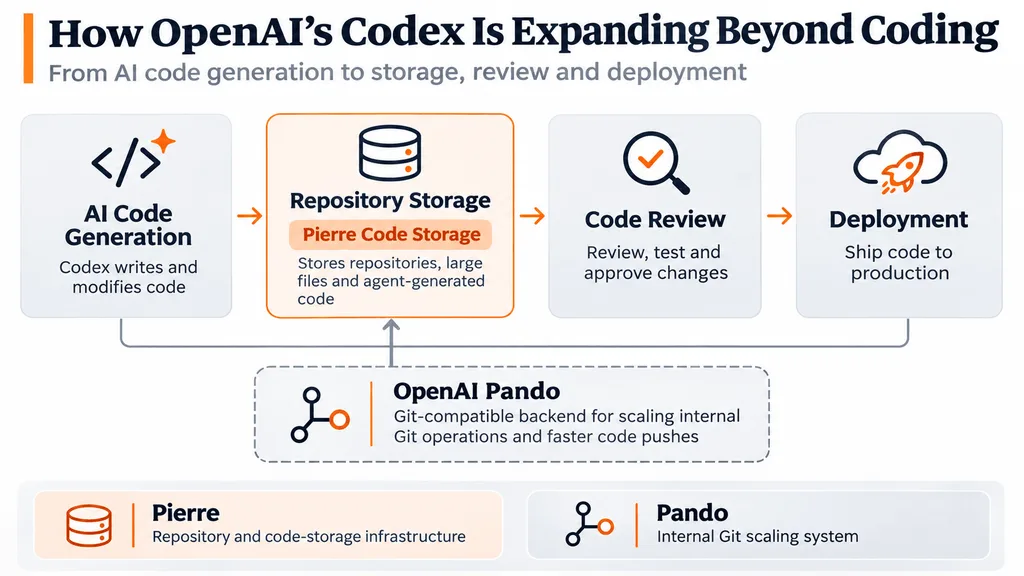
According to an Axios exclusive published November 4, OpenAI plans to integrate Pierre's Code Storage technology more deeply into Codex. Financial terms were not disclosed, while Pierre's existing open-source projects are expected to remain publicly available.
OpenAI Acquires Technology Built for AI Coding Agents
Pierre Computer develops Git-compatible infrastructure designed to handle large volumes of code and other files created by automated software agents.
Its Code Storage platform supports repositories up to 32 terabytes, more than 30 concurrent writes and thousands of API requests per second, according to the company's published specifications.
Customers listed by Pierre include Lovable, Bolt, Amp and Poke, which use the infrastructure to store generated code, agent memory and other frequently changing files.
The acquisition reflects an industry-wide shift toward autonomous software development.
Rather than simply suggesting code, modern agents can create branches, modify files, run tests and submit changes with limited human intervention.
This trend has intensified competition between OpenAI, Anthropic and emerging platforms such as Cursor.
Earlier, OpenAI moved to end its Cursor partnership following the coding platform's acquisition by Elon Musk's SpaceX.
OpenAI's Pando Cuts Code-Push Delays by Nearly 80%
The Pierre deal follows another major infrastructure development.
On November 2, OpenAI introduced Pando, a Git-compatible backend designed to accommodate growing numbers of AI agents working simultaneously.
OpenAI reported that Pando reduced median code-push latency by nearly 80% and now handles almost one petabyte of Git data daily.
The company built the system in approximately 10 weeks, using Codex agents to help implement and test it.
Pando already powers OpenAI's internal development repository, although the company has not announced a general public release.
Together, these developments suggest OpenAI wants greater control over the software-development infrastructure supporting its coding products.
The strategy follows growing enterprise competition, with Microsoft and Meta increasingly scrutinizing spending on third-party AI coding tools.
Why Microsoft's GitHub Faces New Competition
Microsoft's GitHub remains a major platform for source-code management, collaboration and automated development workflows.
However, the rise of AI coding agents is creating demand for infrastructure optimized for machines rather than exclusively human developers.
The competitive relationship is particularly unusual because Microsoft is also a major OpenAI shareholder and commercial partner.
GitHub already integrates Codex and competing agents, meaning OpenAI remains both a technology partner and a potential competitor.
The growing rivalry comes as Microsoft expands its Copilot strategy into more enterprise workflows.
OpenAI has also expanded its developer business through earlier acquisitions, including Astral and cloud development company Ona.
For investors, this broader strategy matters as OpenAI prepares for a potential public listing.
At the same time, greater agent autonomy introduces operational and security risks. Previous OpenAI coding-agent incidents demonstrated why automated code changes require effective oversight.