Key takeaways
- Zuckerberg's wealth tax concerns triggered contentious board negotiations
- Independent directors challenged his demands over company control
- New nonvoting shares protect flexibility while limiting share sales
Mark Zuckerberg built Meta into one of the world's most valuable technology companies and retained enough voting power to control it. Yet in 2026, a dispute over his personal wealth, California taxes and the company's future financing reportedly became so contentious that independent directors considered resigning.
The confrontation ended with an unusual compromise: Meta would create an entirely new class of shares, allowing Zuckerberg to sell billions of dollars in stock without immediately sacrificing voting control.
According to Meta's October 21 SEC filing, a special committee spent eight months examining the arrangement, holding 33 formal meetings while negotiating limits on the founder's power.
How an $11 Billion Tax Threat Became a Boardroom Crisis
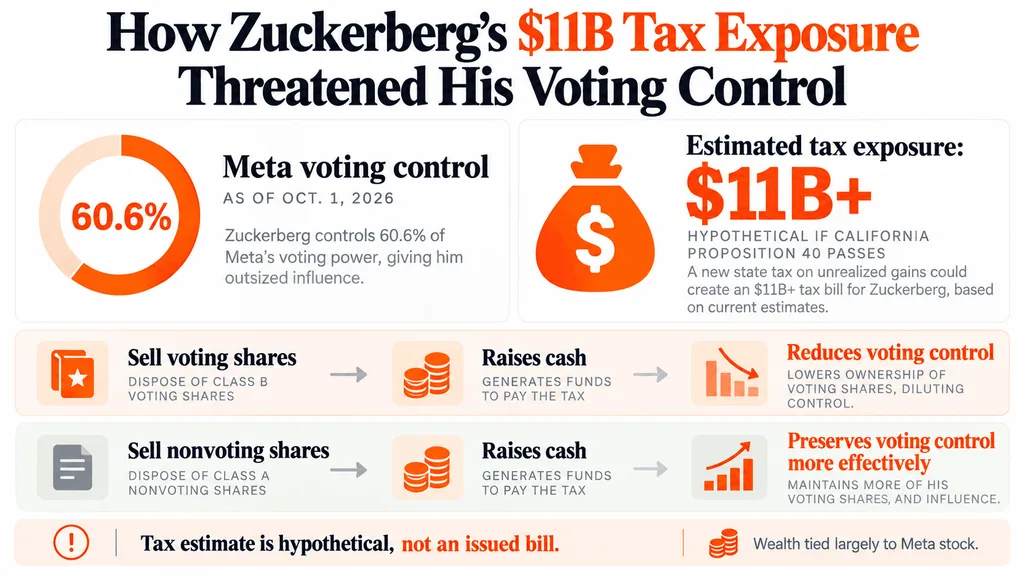
The conflict intensified over California's proposed 5% billionaire wealth tax, scheduled for a November 3 vote. Zuckerberg's fortune, estimated above $220 billion, could expose him to a potential tax liability exceeding $11 billion.
Paying through sales of existing voting shares risked weakening his control over Meta, where he held approximately 60.6% of voting power on October 1.
That influence has already shaped shareholder outcomes, including Meta's rejected Bitcoin treasury proposal, which received just 0.08% support in 2025.
Zuckerberg also considered relocating from California, according to the company's filing. The Washington Post reported that directors contemplated resigning during negotiations involving his compensation demands, relocation threats and refusal to accept certain voting restrictions.
The committee ultimately rejected the idea that preserving his power required unconditional concessions.
Meta Created a New Stock Class to Resolve the Conflict
The compromise introduces Class C shares carrying economic ownership but no ordinary voting rights. Existing Class A and Class B shareholders would each receive one Class C share per share held.
Under the agreement, Zuckerberg can freely sell 20% of his initial Class C allocation. The remaining 80% faces restrictions, with portions gradually released if he continues leading Meta.
In exchange, he committed to remaining near Meta's headquarters for eight years, subject to specified exceptions.
The arrangement also addresses the company's need for financing as AI spending approaches $135 billion–$145 billion in 2026.
Meta's recent earnings announcement showed strong advertising revenue alongside expanding infrastructure commitments. The new stock structure could finance investments and acquisitions without diluting existing voting power.
The Unusual Price of Keeping a Founder in Control
Zuckerberg has received a $1 annual salary since 2013. Meta's committee argued that giving him additional conventional compensation could create significant shareholder costs, particularly when his substantial equity holdings already align his interests with the company.
But independent directors also questioned whether protecting his majority control should justify creating another layer of unequal shareholder voting rights.
The dispute illustrates a longstanding tension at Meta. Investors have previously challenged the company's capital allocation, while increasingly expensive AI investments are renewing scrutiny of management decisions.
The latest Meta stock decline shows that even strong revenue growth does not eliminate investors' concerns over spending.